
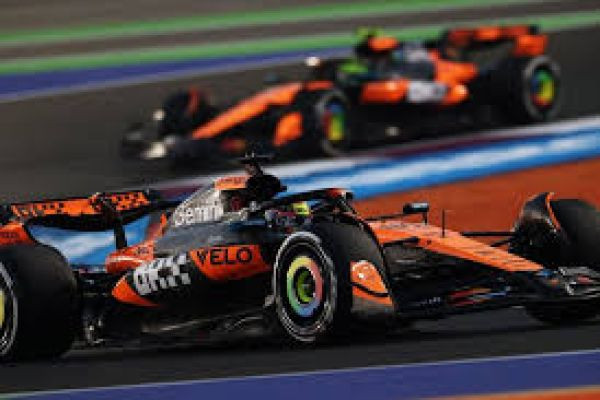
The Qatar Grand Prix, held at the state-of-the-art Lusail International Circuit, has rapidly cemented its place as a visually stunning and physically grueling event on the Formula 1 calendar. Unlike many traditional races, the Qatar GP transforms into a spectacle of speed under powerful floodlights, offering a unique challenge to drivers and teams.
The Lusail Crucible: Speed and Endurance
The Lusail International Circuit is defined by its sweeping, high-speed corners and a lengthy main straight. Built primarily for motorcycle racing, its layout demands aerodynamic efficiency and physical stamina from the drivers.
Track Characteristics:
Length: Approximately 5.4 kilometers (3.37 miles).
Corners: 16 (10 right, 6 left).
Defining Feature: The track features a relentless sequence of medium-to-high-speed curves in the middle sector, particularly from Turn 12 to Turn 15. This section is highly demanding on the tires and tests a car's overall balance and downforce capabilities.
Overtaking: While the front straight offers a prime DRS zone for overtaking into Turn 1, passing opportunities elsewhere are challenging due to the continuous nature of the fast corners, placing a premium on qualifying position and pit-stop strategy.
The Challenge of the Night
Hosting the race after sunset mitigates the extreme daytime heat of the Qatari desert, but it introduces a distinct set of challenges that teams must master.
Temperature Management: While air temperature is lower, the track surface still remains warm, though conditions evolve significantly throughout the weekend. The shift from sunny daytime practice sessions to cooler evening sessions makes finding the correct car setup a moving target.
Sand and Track Evolution: The desert proximity means sand can be blown onto the track, especially during the early sessions. This leads to a 'green' and slippery track surface that cleans up and gains grip as more rubber is laid down. Drivers must contend with this rapid track evolution, particularly in qualifying.
Physical Toll: The fast, sustained cornering loads place immense strain on the drivers' necks. Even in cooler air, the high G-forces combined with the need for absolute precision over long periods makes this one of the most physically demanding races of the year.
Strategic Significance
The Qatar Grand Prix's late-season slot often means it plays a pivotal role in the climax of the Formula 1 World Championship, sometimes hosting title-deciding moments.
Beyond the championship battle, the race is a showcase for modern F1, highlighting its commitment to global expansion and stunning visual presentation. The floodlights illuminate the action dramatically, providing spectacular television coverage and a truly unique atmosphere for spectators.
The event is typically run over the standard F1 weekend format, but its recent inclusion as a Sprint Race venue has added an extra layer of complexity, demanding immediate performance from the teams and ensuring competitive action from Friday onwards.
In short, the Qatar Grand Prix is a modern classic—a blend of high-speed technical demands and dramatic night racing that consistently delivers high-stakes excitement on the desert edge.